The problem: a single route isn’t enough
In traditional e-commerce, a merchant configures a single processor and every transaction goes through it. If the customer’s issuing bank rejects the operation, the sale is lost. This works reasonably well for sectors with a 95% approval rate. But in cannabis and CBD, where the typical approval rate sits around 70-80% with a single acquirer, letting 20-30% of attempts slip through is simply burning margin.
What smart routing actually is
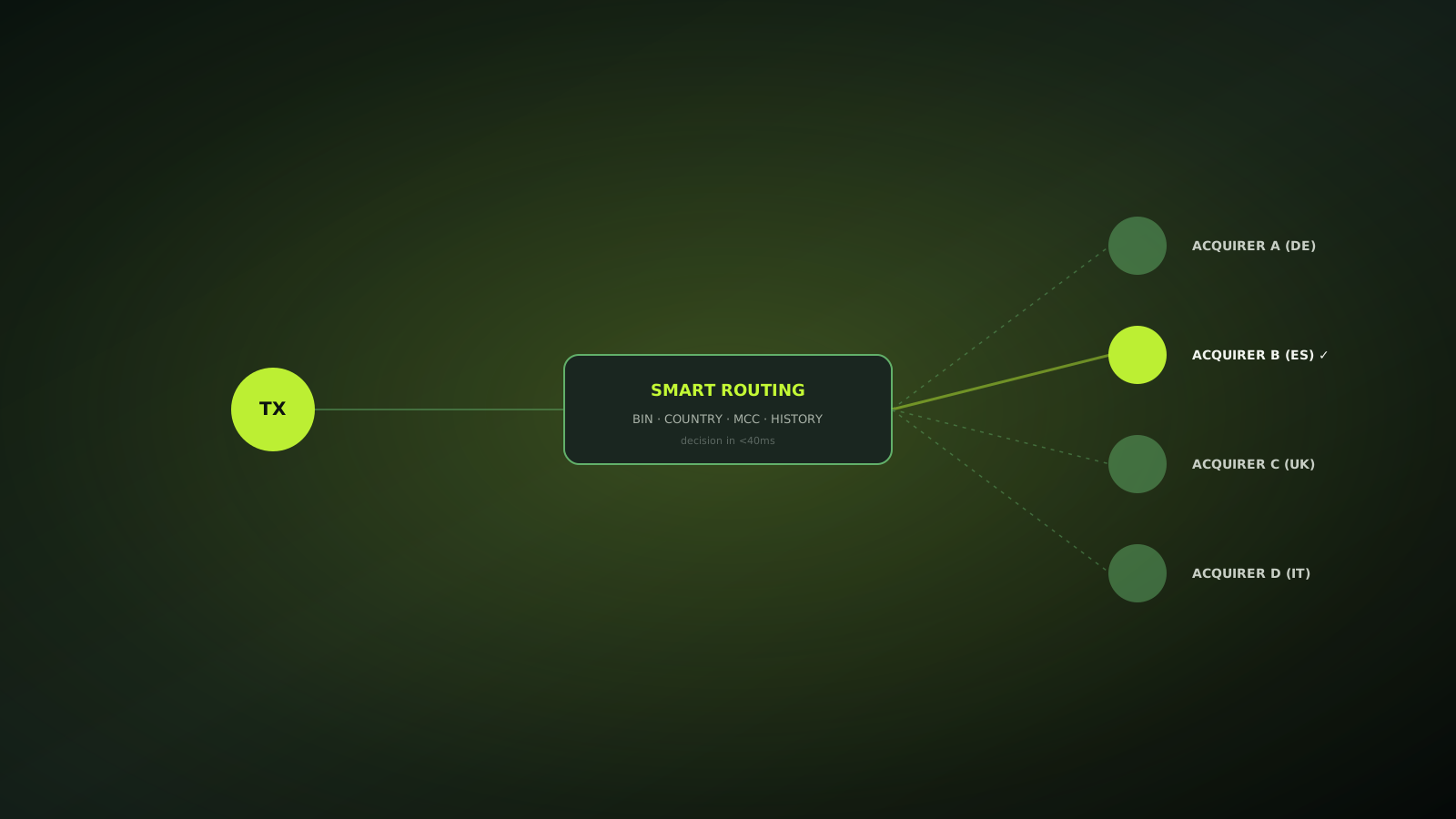
Smart routing is the layer that decides, for each transaction, what the best route is to settle it. It is not a load balancer or a simple fallback — it is a decision engine that evaluates multiple variables in parallel before routing:
- Customer BIN: the first 6-8 digits of the card identify the issuing bank. Certain issuers approve better at certain acquirers (because of commercial relationships, geography, history).
- Customer country vs acquirer country: cross-border has higher rejection rates and higher fees. If the customer is German and a German acquirer is available, that route wins.
- Currency and amount: some acquirers offer better rates for tickets above €200; others have an advantage on micropayments.
- History: if a route has had a low approval rate in the past 24 hours for a specific segment, its priority is automatically downgraded.
The layers: routing + fallback chains
The engine operates on two levels:
- Initial routing: picks the route with the highest probability of approval for that specific transaction (not the cheapest, but the most likely to be approved).
- Fallback chain: if the primary route returns a soft decline (insufficient funds, do not honor, etc. — codes that may change on retry), the engine automatically retries on a secondary route. The customer sees nothing: only the final result. Hard declines (fraud, stolen card) are not retried — they are respected.
Metrics that matter
When evaluating a high-risk processor, the numbers you need to ask for are:
- Authorization rate by segment (not global) — the aggregated average hides a lot of information
- Average attempts per successful sale — good smart routing achieves approvals with 1.0-1.2 attempts; a bad one needs 1.5+
- Cross-border vs domestic ratio — if your merchant business sells to customers in several countries, demand separate metrics
Real numerical example
A merchant selling CBD in Spain with a single acquirer had a 74% approval rate and an average ticket of €58. After migrating to a processor with smart routing and 4 acquirers configured: approval rate climbed to 91% in 60 days. Keeping the same volume of payment attempts, actual sales grew by 23%. There was no change in traffic, catalogue or marketing — only the infrastructure underneath.
Smart routing isn’t a marketing upsell: it’s the difference between a profitable operation and one that bleeds money through the final funnel step.